
Skip to content
Practical applications, mapped to AI types and constraints

Practical Applications of AI in Different Industries

This page shows how modern AI is applied in real workflows, from computer vision quality inspection to language-based knowledge search. Each section highlights typical inputs, what the model outputs, and the controls used to keep systems reliable and safe.

AI technology visualization dashboard showing computer vision and analytics in modern environment

How to read the examples

  • Inputs: what data the system uses.
  • Outputs: predictions, classifications, summaries, or recommendations.
  • Controls: validation steps, monitoring, and human review where needed.

Cross-industry AI patterns you will see repeatedly

Many AI deployments follow similar patterns, even when the domain differs. A vision model might flag defects, a forecasting model might predict demand, and a language model might draft responses, but each still needs clear task definitions, reliable inputs, and measurable outcomes. The highest-value workflows tend to be repeatable, data-rich, and tolerant of small errors when there is human oversight. For higher-impact use, systems typically add governance controls such as approval gates, audit logs, and fallback procedures.

A practical way to evaluate a use case is to ask: what is the decision, what evidence supports it, and what happens when the system is wrong? This frames AI as a support layer inside a process rather than a standalone solution. It also makes it easier to choose a suitable model type and define monitoring so performance stays stable as data and environments change.

Data readiness

Most failures come from inconsistent data, missing labels, or changing conditions. Start with a simple baseline, then add complexity only if it improves measured outcomes.

Human in the loop

In many practical settings, AI triages or drafts while people validate. This reduces risk and helps generate feedback data to improve the system over time.

Monitoring and drift

Performance can degrade when inputs shift. Monitoring, periodic evaluation, and clear rollback plans help keep AI tools dependable in production.

Industry applications

The examples below describe common AI-enabled workflows. They are presented in an educational way so you can connect an AI type to a practical task and understand the typical constraints. For definitions, see Types of AI.

AI in healthcare medical imaging analysis computer vision realistic clinical workstation

Healthcare

AI supports clinical workflows by helping prioritize cases, reduce documentation burden, and assist with image-based pattern recognition. Use cases often require strict privacy, robust evaluation, and clear oversight responsibilities.

  • NLP: summarizing clinician notes and extracting structured fields from text.
  • Vision: highlighting regions of interest in medical images for review.
  • Controls: audit logs, access controls, and human validation before decisions.

AI manufacturing quality inspection computer vision robotic arm factory line

Manufacturing

In manufacturing, AI is frequently used for visual inspection, predictive maintenance, and anomaly detection. Success depends on stable sensor inputs and clearly defined tolerance thresholds.

  • Vision: defect detection and measurement on production lines.
  • Time series: vibration and temperature signals for predictive maintenance.
  • Controls: calibration checks, periodic re-labeling, and drift monitoring.
AI business operations analytics forecasting dashboard modern office tech scene

Business operations

Operations teams often use AI to forecast demand, detect unusual activity, and make internal knowledge easier to find. A strong pattern is pairing AI outputs with review rules and business constraints.

  • ML forecasting: planning inventory, staffing, and capacity.
  • NLP: internal search and summarization across documents and policies.
  • Controls: access rules, source linking, and measurement against KPIs.
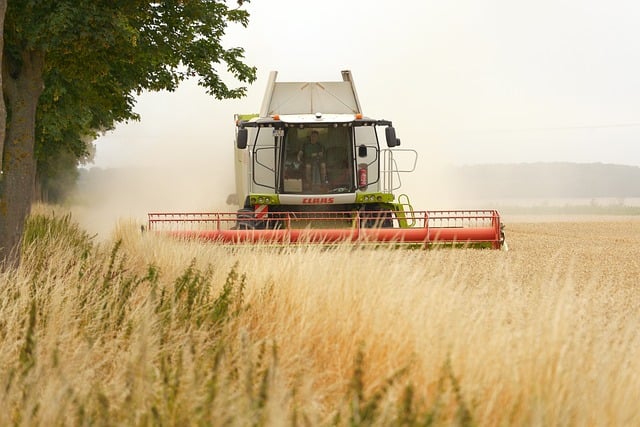
AI precision agriculture drone monitoring crops computer vision mapping field

Agriculture

Agriculture use cases often combine sensors, satellite imagery, and analytics to support monitoring and targeted interventions. The main constraint is that conditions vary by season, location, and equipment.

  • Vision: identifying plant stress patterns and mapping field variability.
  • Forecasting: yield estimation and planning based on historical signals.
  • Controls: seasonal recalibration and careful validation before action.
AI customer support chatbot interface natural language processing service desk

Customer support and service

Language-based assistants help with first responses, routing, and summarizing cases. The key is to keep responses grounded in approved content and escalate when confidence is low.

  • NLP: intent detection, suggested replies, and conversation summaries.
  • Workflow: handoff to a human agent for complex or sensitive issues.
  • Controls: approved knowledge base, redaction, and response constraints.
AI in daily life smart home assistant recommendation system modern living room

Daily life and consumer tools

Many everyday tools use AI behind the scenes for recommendations, spam filtering, and speech recognition. These systems should be designed with clear user controls and privacy options.

  • Classification: identifying spam, fraud signals, or harmful content.
  • Speech: transcribing and understanding spoken commands.
  • Controls: opt-outs, transparency, and minimal data collection.

Implementation checklist (practical and non-technical)

A useful AI application is one that improves a measurable outcome inside a defined process. Before adopting a tool, specify the job to be done, identify what success looks like, and decide how outputs are reviewed. This keeps expectations realistic and reduces the chance of deploying a system that performs well in a demo but fails in day-to-day conditions.

  1. 1

    Define the decision and the boundary

    Describe what the system should do, what it should not do, and when to escalate to a person.

  2. 2

    Verify inputs and data permissions

    Ensure data is accurate, consistent, and used with appropriate permissions and retention limits.

  3. 3

    Measure performance in real conditions

    Test with representative samples, track error types, and decide what rate of mistakes is acceptable for the task.

  4. 4

    Monitor and improve

    Set up monitoring, periodic review, and a rollback plan. Treat AI as a maintained system, not a one-time installation.

Get the learning sequence

Register to receive curated explanations and updates focused on real-world use cases.

Register